Free Shipping for all Order of ₹500
COD payment is available.


Triple Sugar Iron Agar: Principle, Uses & Results
Triple Sugar Iron Agar: Principle, Uses & Results
A microbiologist begins examining an unknown enteric bacterium. Under the microscope, its appearance offers only limited clues about its identity.
The next step is to find out what the organism is actually capable of.
Can it ferment various sugars? Does it produce gas during fermentation? Can it produce hydrogen sulphide under the test conditions?
These metabolic differences can tell a lot more than just appearance. A single culture tube can bring several of these reactions together and make them visible.
This is where Triple Sugar Iron Agar becomes useful. The changes in the slant, butt, gas production and blackening gives important biochemical information to the microbiologists about the organism.
What Is Triple Sugar Iron Agar?
Triple Sugar Iron Agar is a differential medium used to identify gram-negative enteric bacilli on the basis of biochemical reactions. It is useful to observe carbohydrates being fermented, gas produced and hydrogen sulphide produced in the same culture tube.
The medium has a slant and a deeper butt, and these offer different conditions for bacterial growth. Observing reactions in both regions helps microbiologists understand how an organism uses the available carbohydrates.
Any visible changes in growth can be useful to differentiate between bacteria with similar characteristics.
What Are the Three Sugars in TSI?
Triple sugar iron agar contains dextrose monohydrate, lactose, and sucrose as fermentable carbohydrates. Their concentrations lead to useful reaction patterns.
Dextrose appears at 1 gram per litre. Lactose and sucrose each appear at 10 grams per litre.
This allows differentiation between bacteria that can only ferment dextrose and those that can ferment other sugars.Bacteria that only use dextrose will produce acid throughout the whole medium. As dextrose becomes limited, conditions on the aerobic slant change.
If the bacteria can ferment lactose and sucrose, there will still be enough acid to keep the slant acidic. Triple sugar iron agar gets its name because there are three fermentable sugars and an iron-based detection system for hydrogen sulphide.
Principle of Triple Sugar Iron Agar

The principle behind this test is based on what the bacteria can do with the available sugars and what they will produce metabolically.
Fermentation of sugar will result in acid production, which will cause the pH to decrease. Phenol red will therefore turn from red to yellow.
Organisms fermenting only dextrose produce a yellow butt and a red slant. Peptone utilisation on the slant creates alkaline products, restoring the red colour.
If an organism can also ferment lactose or sucrose, there will be enough acid produced to make both the slant and butt yellow.
Some bacteria can reduce sodium thiosulphate and produce hydrogen sulphide. This will react with iron ions to produce a black precipitate in the butt.
Gas production can be seen in many ways such as bubbles, cracks and agar displacement.
Composition of Triple Sugar Iron Agar (TM 424)
The formulation combines nutrient sources, fermentable carbohydrates, an indicator system, salts, and a solidifying agent.
|
Ingredient |
Gms / Ltr |
|
Beef extract |
3.000 |
|
Peptone |
20.000 |
|
Yeast extract |
3.000 |
|
Lactose |
10.000 |
|
Sucrose |
10.000 |
|
Dextrose monohydrate |
1.000 |
|
Ferrous sulphate |
0.200 |
|
Sodium chloride |
5.000 |
|
Sodium thiosulphate |
0.300 |
|
Phenol red |
0.024 |
|
Agar |
12.000 |
Peptone, yeast extract, and beef extract all provide nitrogenous substances, sulphur, trace elements, and vitamins. Sodium chloride helps in keeping the osmotic pressure balanced. Phenol Red acts as a pH indicator. Sodium thiosulphate and ferrous ions are used to assist with the hydrogen sulphide indicator.
Agar provides the solid structure required for the slant and butt.
What Does the Medium Test For?
In the TSI test microbiology, the medium provides a number of metabolic clues from a single inoculated tube. The results will show if the microorganism can ferment dextrose, lactose or sucrose.
The triple sugar iron agar also demonstrates gas formation and hydrogen sulphide production. These reactions help to differentiate between enteric bacteria that look alike visually.
This test helps provide biochemical evidence to help identify the bacteria. However, microbiologists interpret the evidence provided by this biochemical test along with other relevant information.
Reading Positive and Negative TSI Results
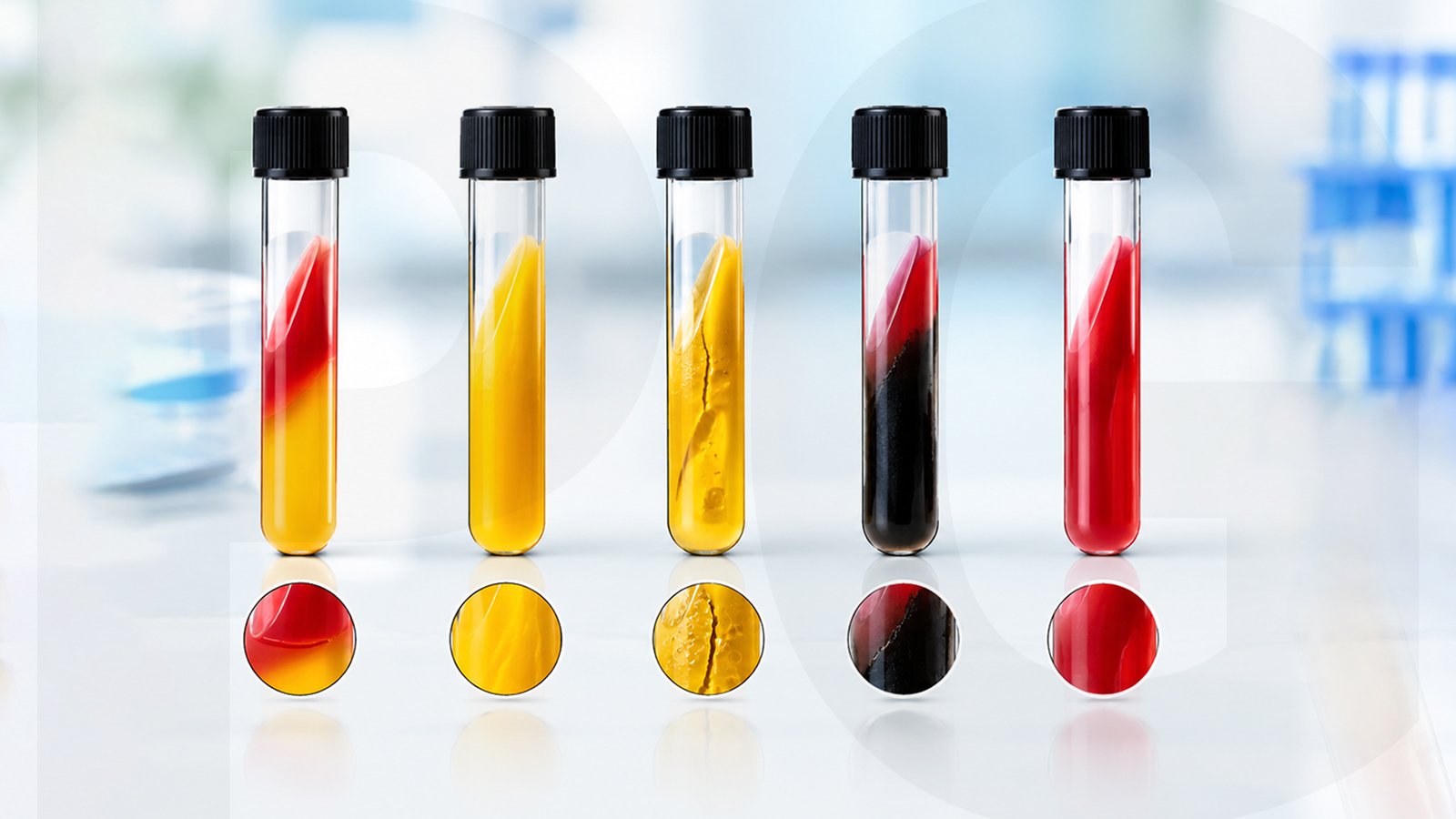
A red slant with a yellow butt indicates dextrose fermentation without lactose or sucrose fermentation. A yellow slant and butt indicate additional sugar fermentation.
Gas production is indicated by cracks in the medium, bubble formation and agar displacement. A black precipitate indicates hydrogen sulphide production.
Heavy blackening can hide the butt colour. Hydrogen sulphide forms only under acidic conditions, so blackening still indicates an acidic butt.
A red slant and red butt indicate that the organism did not ferment any of the available sugars under test conditions.
These patterns make the triple sugar iron agar test useful for comparing metabolic behaviour among enteric bacilli.
Why One TSI Result May Not Tell the Whole Story
This medium gives valuable clues, but one result cannot establish an organism’s identity. Microbiologists combine the reaction with other biochemical findings.
Urea Agar or Broth can be used in conjunction with TSI media in the lab to differentiate between Salmonella and Proteus species.
Some H₂S-producing Salmonella may not show H₂S production on this medium. Some organisms may show H₂S on Kligler Iron Agar instead.
Sucrose utilization can suppress the enzymatic pathway responsible for hydrogen sulphide production in certain organisms.
This effect can alter the expected TSI reaction. Microbiologists should consider the complete biochemical profile rather than one visible pattern.
Conclusion
The TSI tube provides visual evidence of bacterial metabolism. The change in slant, butt, cracking and black precipitation provide separate visual clues.
Instead of remembering colour combinations, microbiologists can interpret the reaction by associating these changes with their biological causes.
This medium brings together multiple observations of metabolic activity, allowing a more informed approach to identify enteric bacteria.
For more information about the Triple Sugar Iron Agar (TM 424), click here.
Frequently Asked Questions (FAQs)
Q1. Why is it best to use a pure culture for the TSI test?
A. A pure culture will ensure that only one species of organism is producing the observed reactions. If there are mixed cultures, there may be confusing or misleading results.
Q2. What colour does uninoculated TSI Agar usually have?
A. The phenol red indicator makes the prepared medium appear reddish-orange in colour before the pH is changed by bacterial growth.
Q3. Why is the tube not tightly sealed during incubation?
A. Sufficient air exchange creates the right conditions for reactions on the slant.
Q4. Is TSI Agar suitable to identify a bacterial species?
A. No. Usually Microbiologists interpret the TSI reaction along with other biochemical results, morphological or identification results.
Q5. How is a TSI tube inoculated?
A. The inoculating needle generally enters the butt with a single stab. The culture then spreads across the slant surface.

leave a reply
Your email address will not be published. Required fields are marked *





The information below is required for social login
Sign In
Create New Account