Free Shipping for all Order of ₹500
COD payment is available.


Hektoen Enteric Agar: Understanding the Challenge of Isolating Enteric Pathogens
Hektoen Enteric Agar: Understanding the Challenge of Isolating Enteric Pathogens
Imagine an intestinal sample full of various species of bacteria. Some are normal gut bacteria and some cause disease. These bacteria are difficult to distinguish when grown together on the same plate.
Microbiologists need a method of working reliably with these mixed populations. They can isolate single colonies and identify organisms that require further identification with appropriate culture media. Hektoen Enteric Agar facilitates this by combining selective inhibition with biochemical differentiation. Understanding how this medium works explains why microbiologists look for certain growth characteristics when they are investigating a pathogen.
Why Is Hektoen Enteric Agar Used?

Isolating a suspected pathogen takes more than getting bacteria to grow. Microbiologists also have to suppress the growth of other organisms and distinguish possible pathogens from normal flora and other bacteria.
Hektoen Enteric Agar (TM 121) addresses both problems as it is selective and differential. This medium was formulated by the researchers to facilitate the isolation of Salmonella and Shigella, especially from specimens with large numbers of mixed intestinal flora.
Some of its ingredients inhibit many undesirable organisms and stimulate the growth of the target bacteria. It exposes differences in bacterial metabolism with visible reaction. Together, such features enable the microbiologists to select the colonies for further investigation.
What Happens When Bacteria Grow on the Medium?
The working principle of Hektoen Enteric Agar is selective inhibition and biochemical reaction. These two processes in combination enable microbiologists to differentiate potential pathogens from the flora that present alongside them.
Bile salts give selective action. They inhibit many Gram-positive bacteria and restrict some competing organisms. This decreases the growth of unwanted organisms and increases the chance of recovering the target bacteria from mixed samples.
Selective inhibition alone will not distinguish between different enteric organisms. The medium also contains lactose, sucrose and salicin to allow differences in carbohydrate fermentation to be detected.
These carbohydrates are fermented by bacteria to form acidic end products. The resulting pH changes affect the indicators in the medium and give characteristic colony appearances. Non-fermenting organisms react differently under similar conditions.
The medium also permits the detection of hydrogen sulfide production. Sodium thiosulphate supplies the substrate, while ferric ammonium citrate helps reveal the reaction. The bacteria produce hydrogen sulfide which reacts with the iron salts to produce a dark precipitate.
The combined reactions are useful for identification of bacteria. Then the microbiologists can select suspicious colonies for further testing rather than just growth.
From Inoculation to Interpretation
With proper preparation and inoculation, microbiologists can obtain meaningful results. The medium is dried as per the instructions of the manufacturer. They then pour the prepared medium into sterile petri plates and allow it to solidify.
In testing, the microbiologist streaks the proper specimen on the surface of the agar. This technique helps in the separation of bacterial cells and also promotes the growth of individual colonies. Good aseptic technique also minimizes the risk of introducing unwanted microorganisms.
Microbiologists will plate samples on Hektoen Enteric Agar according to the incubation conditions described in the testing method. They incubate and observe the growth, morphology and other characteristic features of the colonies.
Isolated colonies are easier to interpret because crowded growth can hide important details. The microbiologist examines the reactions and checks whether they match the expected results. The preparation and incubation conditions must be according to the manufacturer's instructions and the procedure of testing.
What Can Colony Characteristics Tell Us?
Microbiologists use the characteristics of colonies to help them identify the types of organisms in a sample. The biochemical reactions specific to this medium give rise to characteristic growth patterns.
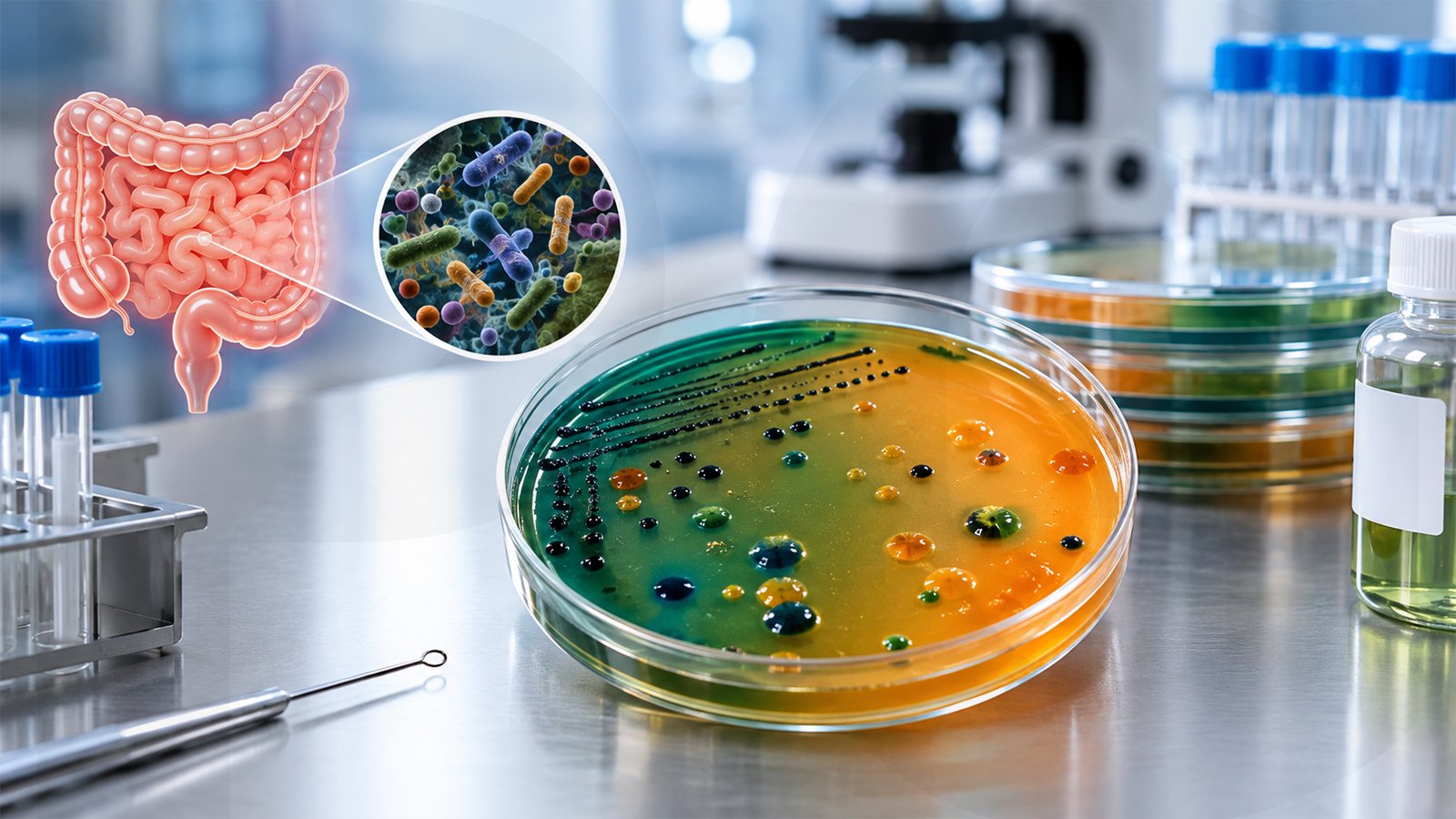
Salmonella colonies are usually blue-green, and many strains produce black centers by the production of hydrogen sulfide. Generally, Shigella produces green to blue-green colonies and does not have black centers. However, individual strains may show atypical reactions.
Escherichia coli and other common lactose fermentors typically have orange to salmon-colored colonies. Other carbohydrates that are fermented in enteric organisms can look the same. Some strains of Proteus may also produce colonies with black centers, which may complicate interpretation.
Microbiologists use these characteristics of colonies to differentiate between pathogens and other organisms growing. But morphology alone cannot identify a species. If the testing method needs confirmation, microbiologists should perform appropriate biochemical, serological and molecular tests.
Where Does the Medium Fit, and What Are Its Limitations?
Microbiologists use this medium in workflows that investigate suspected enteric pathogens. It’s also applied in clinical microbiology and in food testing to isolate Salmonella or Shigella. The method is chosen by the laboratory based on the specimen and the purpose of the testing.
The medium is useful but it has its limits. Certain target organisms may fail to grow in particular environments or may react in unexpected ways. Other bacteria can produce similar colony characteristics, which makes interpretation less straightforward. Selective media may also cause unintentional suppression of some organisms.
For that reason, results have to be read alongside the specimen history, other culture results, and confirmatory testing. No single colony feature counts as definitive proof of identity.
Conclusion
Enteric pathogens must be isolated with careful separation, observation and interpretation. Selective inhibition suppresses the competing organisms and biochemical reactions aid in the characterization and differentiation of the suspect organisms. Understanding the function of Hektoen Enteric Agar allows microbiologists to better analyze the results of cultures. But colony features are only preliminary clues, not a definitive identification. Suspected pathogens must always be confirmed with appropriate tests.
Frequently Asked Questions (FAQs)
Q1. How does bromothymol blue function in Hektoen Enteric Agar?
The medium contains bromothymol blue to indicate pH. It indicates the pH changes during the fermentation of carbohydrates by bacteria and helps in differentiating bacteria based on the action of their metabolism.
Q2. Does Hektoen Enteric Agar grow fungus?
A. No, the medium is meant mainly for the separation and differentiation of enteric bacteria.
Q3. Where does Hektoen Enteric Agar get its carbon from?
A. This medium contains lactose, sucrose and salicin for differentiation of bacteria capable of fermentation of these carbohydrates.
Q4. Does Hektoen Enteric Agar inhibit the growth of all Salmonella species?
A. No, this medium differentiates presumptive Salmonella colonies, but it doesn’t cover every serotype or species. Confirmation might require additional biochemical, serological or molecular assays.
Q5. What does a black centre on a bacterial colony mean?
A. A black centre commonly indicates hydrogen sulphide production. However, this reaction alone cannot confirm the identity of the organism.

leave a reply
Your email address will not be published. Required fields are marked *


The information below is required for social login
Sign In
Create New Account