Free Shipping for all Order of ₹500
COD payment is available.


Blood Agar: Composition, Uses & Bacterial Growth
Blood Agar: Composition, Uses & Bacterial Growth
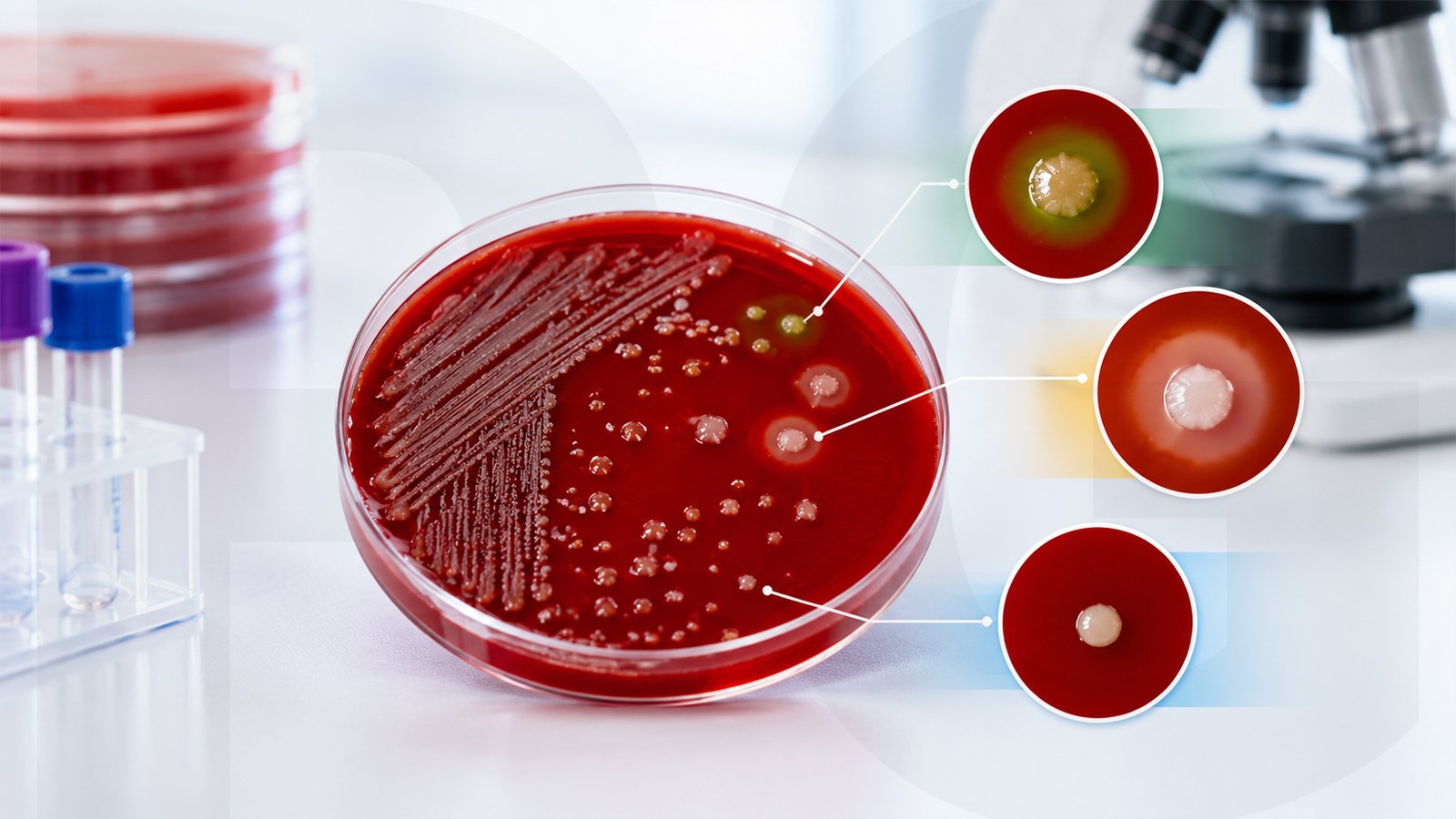
A throat swab arrives in the microbiology lab, carrying a mixture of bacteria. After incubation, several colonies with different characteristics will appear on the culture plate.
These features may be important because they allow laboratory personnel to determine clues as to how individual bacteria interact with red blood cells. These test results are not definitive but may provide important clues in the identification of an organism.
That’s where Blood Agar comes in. It promotes the growth of bacteria and gives hemolytic reactions on the same plate. This agar is useful not only in its ability to grow bacteria but also for the information that can be gained from it about hemolytic activity.
What Is Blood Agar?
Blood agar is an enriched, differential, culture medium, which is used for culturing a variety of bacteria that have high nutritional requirements. The agar consists of a nutrient-rich basal medium with added animal blood, commonly sheep blood.
The extra blood provides nutrients and allows the growth of bacteria that could not grow in a standard medium. At the same time, red blood cells help to reveal hemolysis caused by some species of bacteria.
This combination gives the medium two distinct functions. It supports the cultivation of bacteria and allows laboratory personnel to observe differences in the breakdown of red blood cells.
Principle of Blood Agar
This difference of activity of the medium is due to the action of bacteria on the red blood cells. Some bacteria produce toxins called hemolysins, which damage or kill these cells. The resulting changes around colonies permit the differentiation of different hemolytic patterns.
The appearance depends on the organism, its hemolytic activity, and the culture conditions. But a visible reaction is not enough to identify the bacterium. Laboratory personnel must interpret these results along with other identification tests.
What Goes Into the Medium?
The ingredients determine whether a medium will support growth and show clear hemolytic reactions. Blood agar typically consists of a nutrient-rich base medium with 5% defibrinated sheep blood. The composition may vary from manufacturer to manufacturer.
The base medium usually consists of peptones, beef extract or other nutrient-rich ingredients, sodium chloride and agar. All ingredients are necessary, as they serve different purposes.
Peptones: Contain amino acids, peptides, and other nitrogenous nutrients.
Beef extract: Supplies extra nutrients needed for bacteria growth.
Sodium chloride: Maintains the osmotic balance.
Agar: Creates the solid surface where colonies develop.
Sheep blood: Provides additional nutrients and enables visualization of the hemolytic reaction.
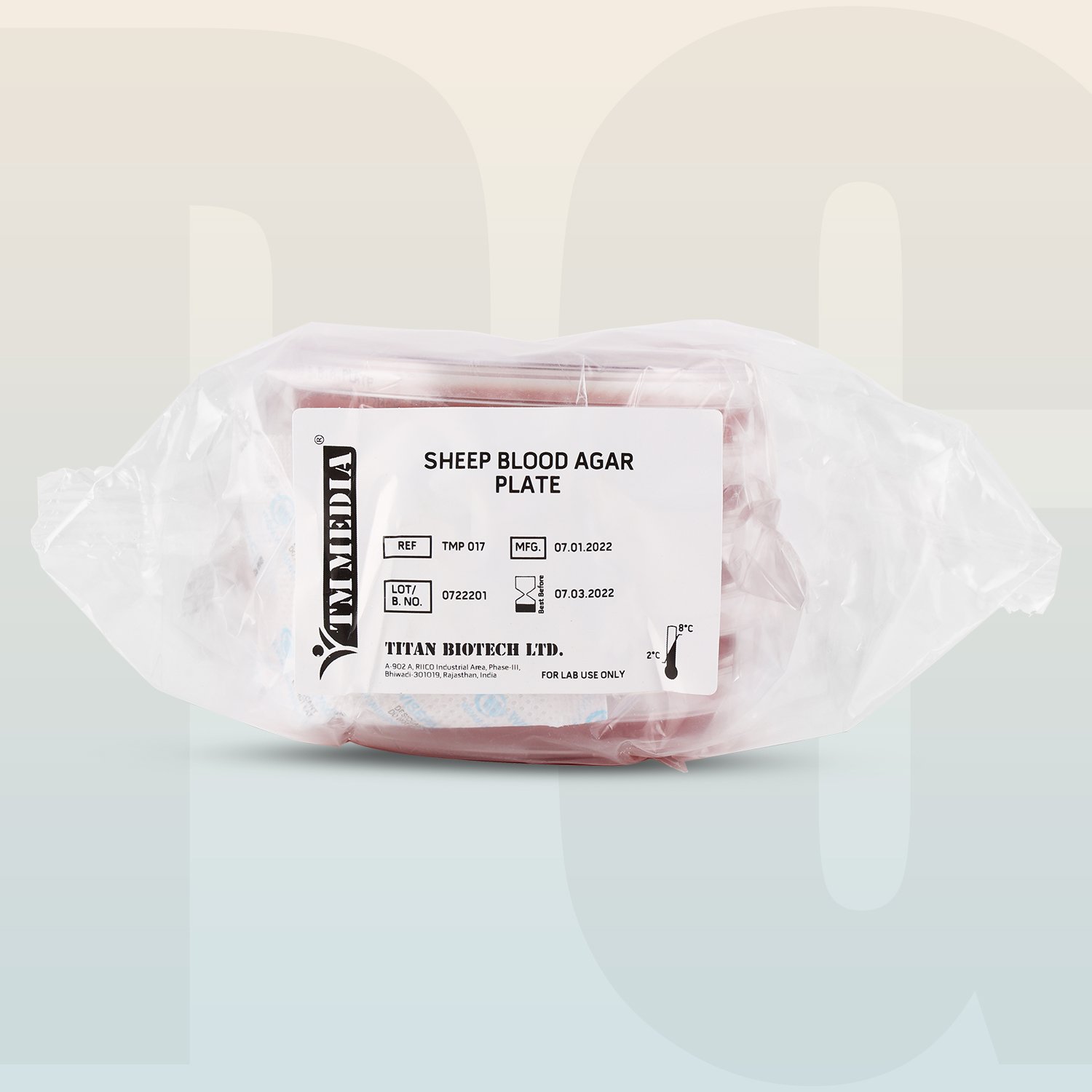
The preparation of the blood agar provides support to the growth of microorganisms and shows damage to red blood cells. Products such as Sheep Blood Agar Plate (TMP 017) facilitate the identification of these hemolytic reactions. The ingredients work together and an unsuitable formulation will affect both bacterial growth and the clarity of hemolytic reactions.
Composition of Sheep Blood Agar
Each ingredient contributes to the medium’s ability to support bacterial growth and reveal hemolysis.
|
Ingredients |
Gms/Ltr |
|
Casein enzymic hydrolysate |
14.000 |
|
Agar |
12.500 |
|
Sodium chloride |
5.000 |
|
Peptic digest of animal tissue |
4.500 |
|
Yeast extract |
4.500 |
|
Sheep Blood |
50.00 ml |
Reading the Three Hemolytic Patterns
Once colonies have appeared, the surrounding areas may exhibit various reactions. The three main patterns describe the extent of damage of red blood cells.
Alpha hemolysis produces a greenish or brownish discoloration around the colonies. That means that there is partial damage to the red blood cells. This pattern is typical for streptococcus pneumoniae.
Beta hemolysis is associated with a complete breakage of the red blood cells, giving a clear area around the bacteria colonies. This reaction is commonly seen in Streptococcus pyogenes.
Gamma hemolysis means there is no detectable hemolysis. Hence, the agar is not surrounded by any clear or green zone of bacterial colonies.
Such patterns can be very subtle, especially where colonies grow close together. Moreover, isolated colonies can provide a more accurate assessment of each reaction. In addition, the establishment of such zones may be dependent upon incubation conditions, particular microorganisms and their activity.
Precautions and Limitations
Several preparation and handling errors may affect medium performance. If the basal medium is too hot, adding blood may damage the red blood cells. Improper mixing may also result in uneven distribution of blood over the surface of the plates.
Test results can be influenced by contamination, ingredient concentrations and storage conditions. Laboratory personnel should use standardized protocols and appropriate controls and carefully examine the medium prior to inoculation.
The medium also has limitations. Some bacteria require special nutrients or selective conditions, which are not provided in this formulation. Strain and environmental factors may also affect hemolysis. The use of a single plate should never be the only basis for a definitive identification.
Where Does the Medium Fit in Laboratory Work?
Blood agar media are useful in the laboratory for culturing a wide variety of bacterial species, including many fastidious organisms. They also facilitate preliminary identification of isolates of appropriate clinical specimens.
This medium is especially useful where laboratory personnel must evaluate the appearances of colonies and their hemolytic activities. For example, the reaction of a streptococcal isolate may help to indicate what further identification tests should be performed.
However, a clear zone alone will not identify a pathogen. Different organisms can give similar patterns, and some species can have different reactions. Before reaching conclusions, laboratories should consider details of the specimen and characteristics of the colony and confirmatory results.
Conclusion
A culture plate can show more than just bacterial growth. The surrounding medium can give useful information about the interaction between the organism and blood cells, which can lead to further investigation.
Blood agar is utilized for nutritional and differential testing purposes. With careful interpretation, preparation and appropriate confirmatory testing, the laboratory professional will be able to obtain the most relevant information from each plate.
For more information about the Sheep Blood Agar Plate (TMP 017), click here.
Frequently Asked Questions (FAQs)
Q1. Is blood agar used in antibiotic susceptibility testing?
A. A few specialized applications may require blood-supplemented media, but there is no need for blood or for a special medium in routine testing.
Q2. Why is the bacterium weakly hemolytic on blood agar?
A. The type of organism and the temperature of incubation or the dilution of the inoculum can cause weak reactions. The reaction should be assessed by the laboratory personnel in appropriate conditions prior to interpretation of the result.
Q3. Does blood agar allow growth of anaerobic bacteria?
A. Yes, some anaerobic bacteria will grow on blood agar if the proper anaerobic conditions are present. But special media and incubation conditions may be required in the laboratory for some organisms.
Q4. Why does the lab use sheep blood?
A. Sheep blood yields consistent hemolytic patterns and is a good medium for the cultivation of numerous clinically important bacterial species.
Q5. Why is it important to prevent blood agar plates from drying?
A. Excessive drying may affect bacterial growth, as well as the quality of the culture surface and the appearance of colony morphology, making interpretation difficult.

leave a reply
Your email address will not be published. Required fields are marked *


The information below is required for social login
Sign In
Create New Account