Free Shipping for all Order of ₹500
COD payment is available.


How Media in Microbiology Help Grow, Separate and Identify Microorganisms
How Media in Microbiology Help Grow, Separate and Identify Microorganisms
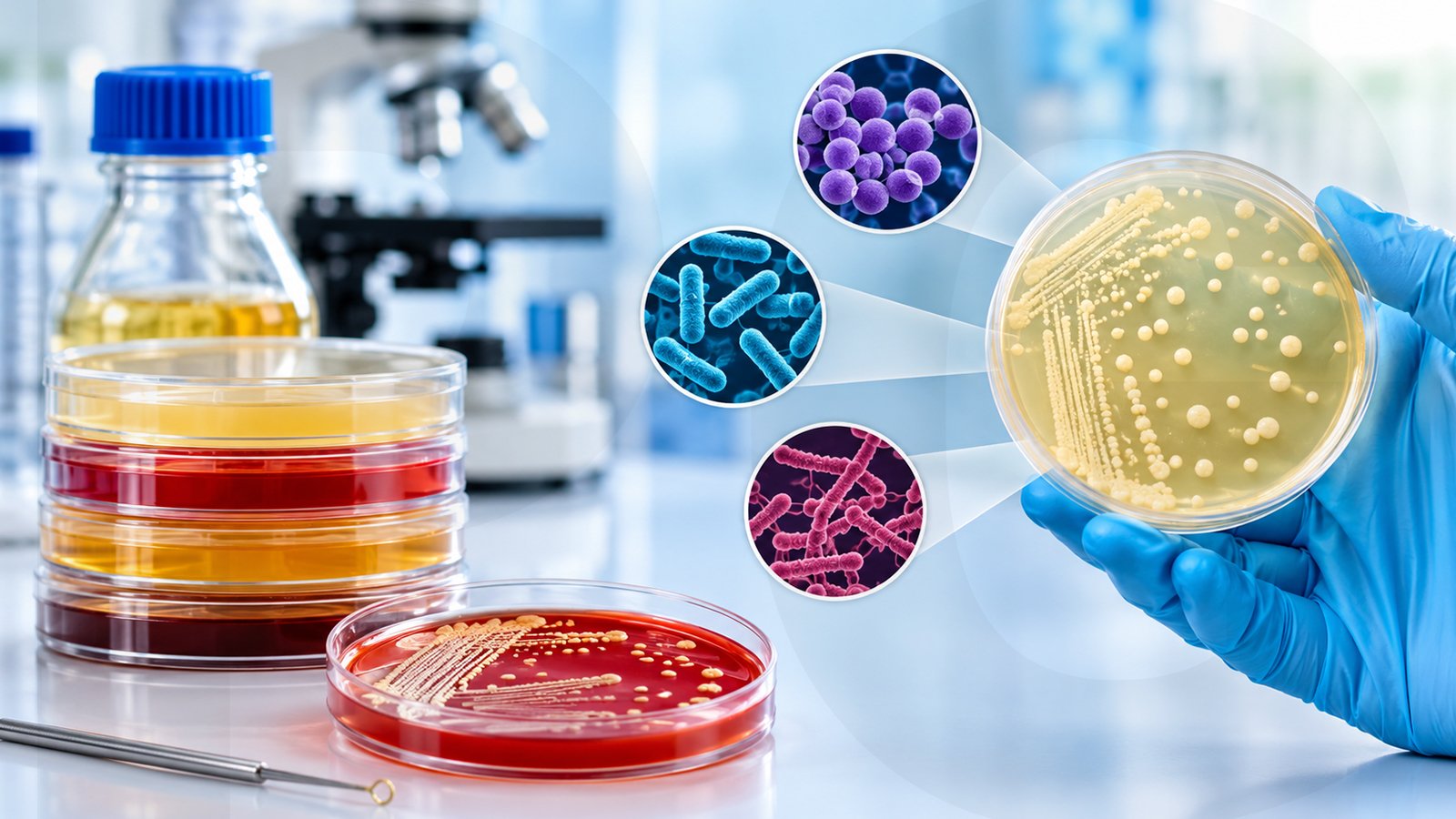
A sample reaches the laboratory with no visible clue about what lives inside it. There could be a variety of organisms present in different amounts and with different nutritional and growth requirements. The next step starts with one important decision. Which environment will allow the right organism to grow?
That decision brings Media in Microbiology into the picture. Culture Media are used to provide microorganisms with the correct conditions to grow. It can also help the laboratory identify, isolate and compare different organisms.
What Is Media in Microbiology?
Microbes require nutrients, water, minerals and conditions that are just the right chemical balance to grow. These requirements are met in a culture medium in a controlled laboratory environment.
However, not all microorganisms will have the same nutritional requirements. Some can be easily cultured on basic media while others will require extra nutrients, growth factors or special conditions.
This is why there will not be one culture media that would work for all organisms. Each medium has been formulated for a particular purpose, group of organisms or laboratory work.
Why Does the Medium Change with the Purpose?
Laboratories do not select a medium only to produce visible growth. They select it based on the question they want to answer.
One medium may support broad microbial growth. Another may favour one group while restricting others. A different medium may create colour changes or other visible reactions.
This purpose-based approach explains the different types of media in microbiology more clearly than a simple list. Each category is used for a specific reason within the laboratory.
Types of Culture Media in Microbiology
General purpose media will grow a wide range of non-fastidious organisms. These organisms grow without any need for unusual nutrients or highly specific conditions. Nutrient Agar (TM 341) is a general purpose medium which will grow many bacterial species.
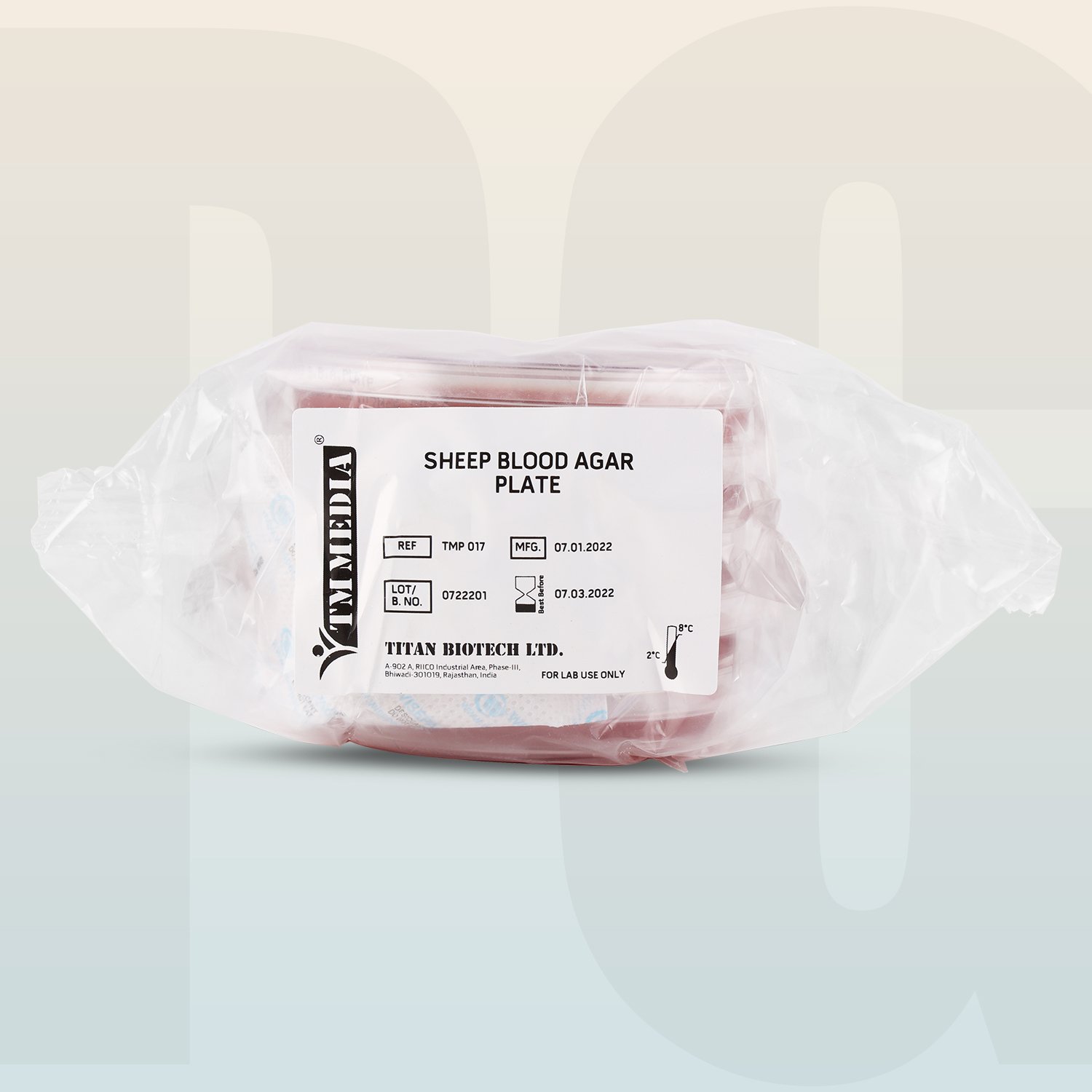
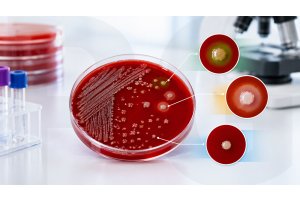
Enriched media have added nutrients to aid the growth of more complex organisms. This can be achieved by adding blood, serum or other nutrients. For example, Blood Agar Plate (TMP 017) is an enriched media with 5% sheep blood which will grow a wide range of organisms. It can also help observe characteristic reactions around growing colonies.
Enrichment media serve a different purpose. They encourage the growth of a target organism in a mixed population. The formulation gives an advantage to that organism in growth. Selenite F Broth (TM 418) is commonly used to enrich Salmonella from stool samples before isolation.
Selective media will only favour the growth of certain organisms. This can be done by adding certain ingredients. Cetrimide Agar (TMH 113) will encourage the growth of Pseudomonas aeruginosa while preventing growth of many other bacteria.
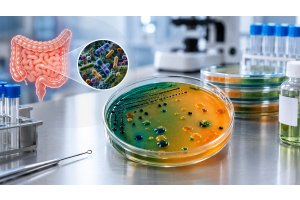
Differential media help to identify different organisms by changes in appearance. This can be done by a change in colour, appearance or effect on the media. MacConkey Agar (TM 337) will differentiate between lactose fermenting bacteria (Pink colonies) and non-lactose fermenters (Colourless colonies).
This shows how media can be classified together based on their use.
The Same Medium Can Tell More Than One Story
Culture media can often be classed under multiple categories. A formulation can perform many functions at once.
Some microbiological media can inhibit unwanted organisms but also show differences between those growing. This combination supports selection and differentiation within one culture step. For example, Mannitol Salt Agar (TM 206) selects salt-tolerant bacteria, such as staphylococci, and differentiates mannitol fermenters through a yellow colour change.
This overlap matters because laboratory needs often involve more than simple growth. A single plate can sometimes provide several observations without requiring separate media.
Understanding this overlap also prevents rigid classification. The purpose and composition of the medium matter more than the label alone.
Solid, Liquid, or Somewhere Between?
Physical form creates another useful classification. Liquid, solid and semisolid formulations are common laboratory practice.
Liquid media do not contain any solidifying agent. In favourable conditions the microorganisms grow throughout the broth. Broth can be used in the laboratories for cultivation, enrichment or other growth-based procedures.
Solid media will contain a solidifying agent, usually agar. The firm surface allows separated colonies to develop. It also makes it easier to see colony size, shape, texture and colour.
Semisolid media have less agar than solid media. This gives a softer medium which will help with specific uses such as certain motility studies.
Physical form does not define function. A liquid or solid formulation can still be for different microbiological purposes.
What Actually Goes Into a Culture Medium?
The culture media consist of different constituents according to their intended function. Peptones and protein digests can give nitrogen and amino acid sources.
Extracts can be a source of vitamins and other nutrients. Carbohydrates can be used to aid energy production or to show what type of metabolic activity is taking place. Salts can be used to ensure the correct osmotic pressure.
Indicators can demonstrate the chemical changes that occur during the growth of microbes. Selective agents may be added to inhibit unwanted organisms. Agar is able to make a stable solid surface.
All components have their individual use and the final composition will determine what can be grown or indicated.
Choosing the Medium Starts with the Question
Medium selection begins with the purpose of the test. The likely organism matters, but the sample type also matters.
A mixed sample may require selective conditions. If the organism is fastidious, then extra nutrients may need to be added. During differentiation stages there could be biochemical reactions.
The lab must decide whether they want to isolate, enrich, maintain or compare. These choices will determine the choice of medium before incubation.
A correct medium will not always give an identification but will give the correct conditions to observe and investigate further.
Conclusion
A culture medium is a prepared environment, but its value is evident when microbial growth begins. Colony colour change, turbidity or other reactions can turn growth into information.
That is the reason why media in microbiology are very important for laboratory work. The right formulation supports the right question.
A sample may begin as something unknown. The Chosen medium allows the observation, quantification and interpretation of invisible microbial growth.
Explore our range of 2500+ Dehydrated Culture Media for your microbiology applications.
Frequently Asked Question (FAQs)
Q1. How does sterilization impact the quality of culture media?
A. Sterilisation is used to remove unwanted microorganisms from prepared media. However, some components may be damaged due to high temperatures. Therefore, a suitable sterilisation method should be used depending on the medium's composition.
Q2. Why are reducing agents added to some media?
A. The media can be provided a suitable environment for anaerobes by adding reducing agents to minimize the amount of oxygen present in the media.
Q3. Why do different organisms need different types of media in microbiology?
A. Different types of microorganisms will require different nutrients and conditions to grow therefore specific media can be used to provide optimum conditions.
Q4. Can culture media expire?
A. Yes. Culture media have a defined shelf life. Moisture loss, contamination and chemical degradation can reduce the quality of the culture media over time. Always check the expiry date prior to use.
Q5. What is a transport medium used for?
A. To keep the microbes alive without allowing significant growth.

leave a reply
Your email address will not be published. Required fields are marked *

The information below is required for social login
Sign In
Create New Account