Free Shipping for all Order of ₹500
COD payment is available.


Indole-3-Acetic Acid (Iaa)
Shop for ₹499 and get flat ₹100 OFF only for new users
MLSIGNUP100
Expiring in 7days 12hr10min49sec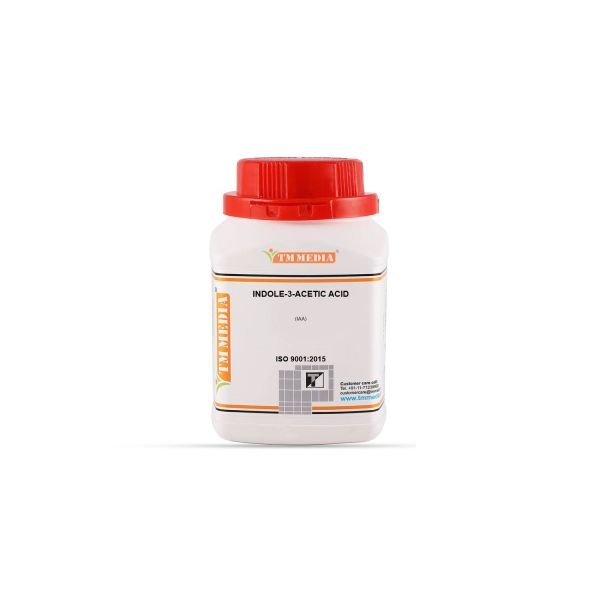
Indole-3-Acetic Acid (IAA) is a naturally occurring plant hormone that belongs to the auxin group. It is a signaling molecule that plays a role in plant development and helps to coordinate growth and the formation of plant organs. By participating in plant signaling processes, IAA contributes to the regulation of growth patterns and developmental responses. Auxins such as IAA are implicated in the coordination of various phases of plant development. Their activity allows plants to control their growth in a developmental context. IAA can thus be investigated within the scope of development of the plant organ and the manner in which the plant coordinates growth between tissues and regions.
Indole-3-Acetic Acid is used in plant science applications to investigate the hormonal signals that regulate plant growth. As a signaling molecule, IAA is relevant to studies of plant growth, organ development and coordinated growth. The action of IAA also helps explain how chemical signals influence developmental processes in plants. The physical properties of the compound are important in the preparation of solutions for laboratory work. Indole-3-Acetic Acid is a white to off white crystalline powder. It is slightly soluble in water and chloroform, freely soluble in alcohol, acetone and ether. These solubility characteristics should be considered when selecting a suitable solvent for the preparation of working solutions.
The specified chemical parameters provide additional information about the quality of the material. The ash content shall not be more than 0.3% and the assay not less than 98.0%. The assay value indicates the level of the specified IAA in the product and the ash specification is a maximum limit for the amount of inorganic residue.
Indole-3-Acetic Acid is a commercially available substance with known physical properties and purity for laboratory applications. Its well-established role in plant signaling provides a platform for investigating the effects of hormonal regulation on organ formation and the concerted development. The biological function and quality specification make it also an interesting reagent for the application in plants and plant related research procedures.
The information below is required for social login
Sign In
Create New Account